

There’s something deeply satisfying about discovering a recipe that feels almost too simple to be true, yet delivers real results in the kitchen. This 2-ingredient cottage cheese flatbread is one of those rare finds. It’s soft, flexible, lightly golden, and surprisingly sturdy, all made with just cottage cheese and flour. No yeast, no rising time, no complicated techniques. Just honest ingredients doing what they do best. Whether you’re cooking for yourself after a long day or trying to put something nourishing on the table fast, this flatbread fits effortlessly into real life.

Table of Contents
Table of Contents
A Simple Dough With Big Potential
Flatbreads have existed across cultures for centuries, mainly because they solve a universal problem: how to make bread quickly with minimal ingredients. This version leans into that tradition while using cottage cheese to add moisture, protein, and a subtle tang. The result is a dough that’s easy to handle and forgiving, even if you’re not confident with baking. You don’t need fancy equipment or prior experience. If you can stir and roll dough, you’re already more than qualified.
Ingredients You Already Know
This recipe stays true to its name, two main ingredients, measured precisely for consistent results every time. Optional seasonings are listed separately and truly optional.
- Cottage cheese, full-fat or low-fat both work, 1 cup (225 g), small-curd preferred for smoother dough
- All-purpose flour, 1 ¼ cups (150 g), plus extra for dusting
- Optional additions if desired:
- Fine salt, ¼ teaspoon
- Garlic powder, ¼ teaspoon
- Dried herbs, ½ teaspoon
Equipment You’ll Need
You don’t need anything special here, which is part of the charm. A basic setup is enough.
- Medium mixing bowl
- Fork or spoon
- Clean work surface
- Rolling pin or sturdy bottle
- Non-stick skillet or cast-iron pan
- Spatula
How the Dough Comes Together
The magic of this flatbread lies in how the cottage cheese interacts with the flour. Cottage cheese contains moisture and milk solids that hydrate the flour quickly, forming a soft dough without resting or kneading for long periods. The curds melt slightly as the bread cooks, giving the flatbread a tender texture rather than a dry, cracker-like finish.
Step-by-Step Instructions
Step 1: Prepare the Base
Add the cottage cheese to a medium mixing bowl. If the curds are large, lightly mash them with a fork to create a smoother consistency. This helps the dough come together more evenly and prevents wet pockets.
Step 2: Add the Flour
Sprinkle the flour over the cottage cheese. If using salt or optional seasonings, add them now. Use a fork or spoon to mix until a shaggy dough forms. At first it may look slightly sticky or uneven, this is normal.
Step 3: Form the Dough
Turn the dough out onto a lightly floured surface. Gently knead for 1 to 2 minutes, just until it becomes smooth and no longer sticky. Avoid over-kneading, as this can make the flatbread tough instead of soft.
Step 4: Divide and Shape
Divide the dough into 4 equal pieces for medium flatbreads, or 6 smaller pieces if you prefer thinner rounds. Roll each piece into a ball, then flatten slightly with your hand.
Step 5: Roll Out
Using a rolling pin, roll each piece into a round approximately 6 to 7 inches in diameter and about 2 to 3 mm thick. Dust lightly with flour as needed to prevent sticking, but avoid adding too much.
Step 6: Heat the Pan
Place a non-stick skillet or cast-iron pan over medium heat. Allow it to heat fully before cooking. No oil is required, but you may lightly grease the pan if preferred.
Step 7: Cook the Flatbreads
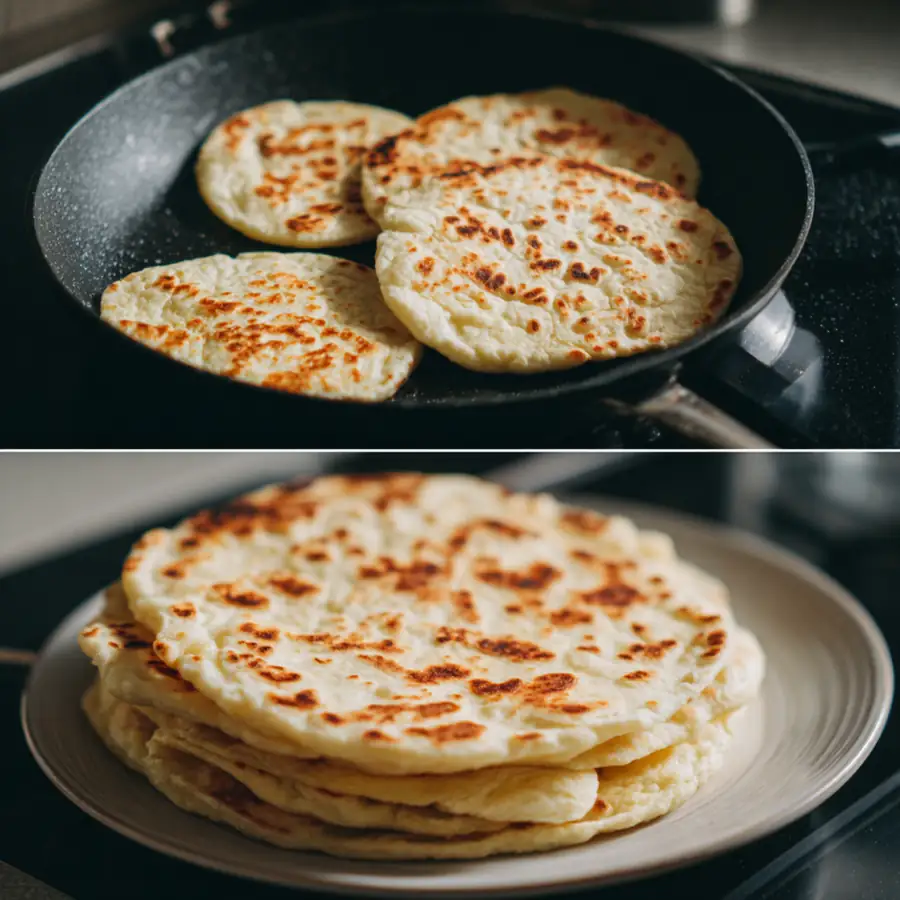
Place one rolled flatbread into the hot pan. Cook for 1½ to 2 minutes on the first side, until bubbles form and light golden spots appear. Flip and cook for another 1 to 2 minutes on the second side.
Step 8: Finish and Repeat
Transfer the cooked flatbread to a clean plate or wrap in a towel to keep warm. Repeat with the remaining dough rounds. Serve immediately or allow to cool completely for storage.
Texture and Flavor Notes
These flatbreads are soft, pliable, and slightly chewy, with a mild dairy flavor that pairs well with both savory and neutral toppings. They won’t puff like pita, but they bend easily without cracking, making them ideal for wraps, scoops, or quick personal pizzas.
Serving Ideas That Actually Work
This flatbread is incredibly versatile, which is why it quickly becomes a repeat recipe. Use it as a wrap for grilled chicken or roasted vegetables, slice it into triangles for dipping, or top it with sauce and cheese for a fast skillet pizza. It also works beautifully alongside soups, stews, or salads when you want something bread-like without the fuss.
Make-Ahead and Storage Tips
If you like planning ahead, this recipe fits right in. Cooked flatbreads can be stored in an airtight container in the refrigerator for up to 4 days. To freeze, stack with parchment paper between each flatbread and freeze for up to 2 months. Reheat in a dry skillet over medium heat for best texture.
Common Mistakes and How to Avoid Them
One of the most common issues is using too much flour. The dough should be soft, not dry. Add flour gradually and stop as soon as it comes together. Another mistake is cooking over heat that’s too high, which can cause burning before the inside warms through. Medium heat is your friend here.
Adjusting the Recipe to Your Needs
If your cottage cheese is very wet, you may need an extra tablespoon or two of flour. If it’s thicker, slightly less flour may be enough. The dough should feel similar to soft play dough, smooth, flexible, and easy to roll.
Nutritional Facts (Per Flatbread, Based on 4 Servings)
Calories: approximately 130
Protein: 7 g
Carbohydrates: 18 g
Fat: 3 g
Fiber: 1 g
Sugar: 2 g
Sodium: varies depending on cottage cheese brand
Frequently Asked Questions
Can I use blended cottage cheese instead of curds?
Yes, blended cottage cheese works very well and creates an even smoother dough. The texture will be slightly more uniform, but the cooking process remains the same.
Does this flatbread taste cheesy?
The flavor is mild and subtle, not strongly cheesy. It tastes more like a soft neutral flatbread with a gentle dairy note.
Can I bake this instead of pan-cooking?
Pan-cooking is recommended for best texture, but you can bake at 200°C (400°F) for about 8 to 10 minutes, flipping once halfway through.
Why is my dough sticky?
Sticky dough usually means the cottage cheese has a higher moisture content. Add flour one tablespoon at a time until manageable.
Can I double the recipe?
Absolutely. This recipe scales very easily. Just keep the same ratios and work the dough gently.
Is this flatbread good for wraps?
Yes, it’s flexible and strong enough for wraps once cooled slightly.
Can I reheat it the next day?
Yes, reheat in a dry skillet or microwave briefly. Avoid overheating to keep it soft.
Final Thoughts on This Flatbread
This 2-ingredient cottage cheese flatbread proves that simple doesn’t mean boring. It’s one of those recipes that quietly earns a permanent spot in your routine because it works every time and adapts to whatever you need it to be. Whether you’re cooking for convenience, comfort, or creativity, this flatbread meets you exactly where you are, no stress, no extras, just good food made easy.