
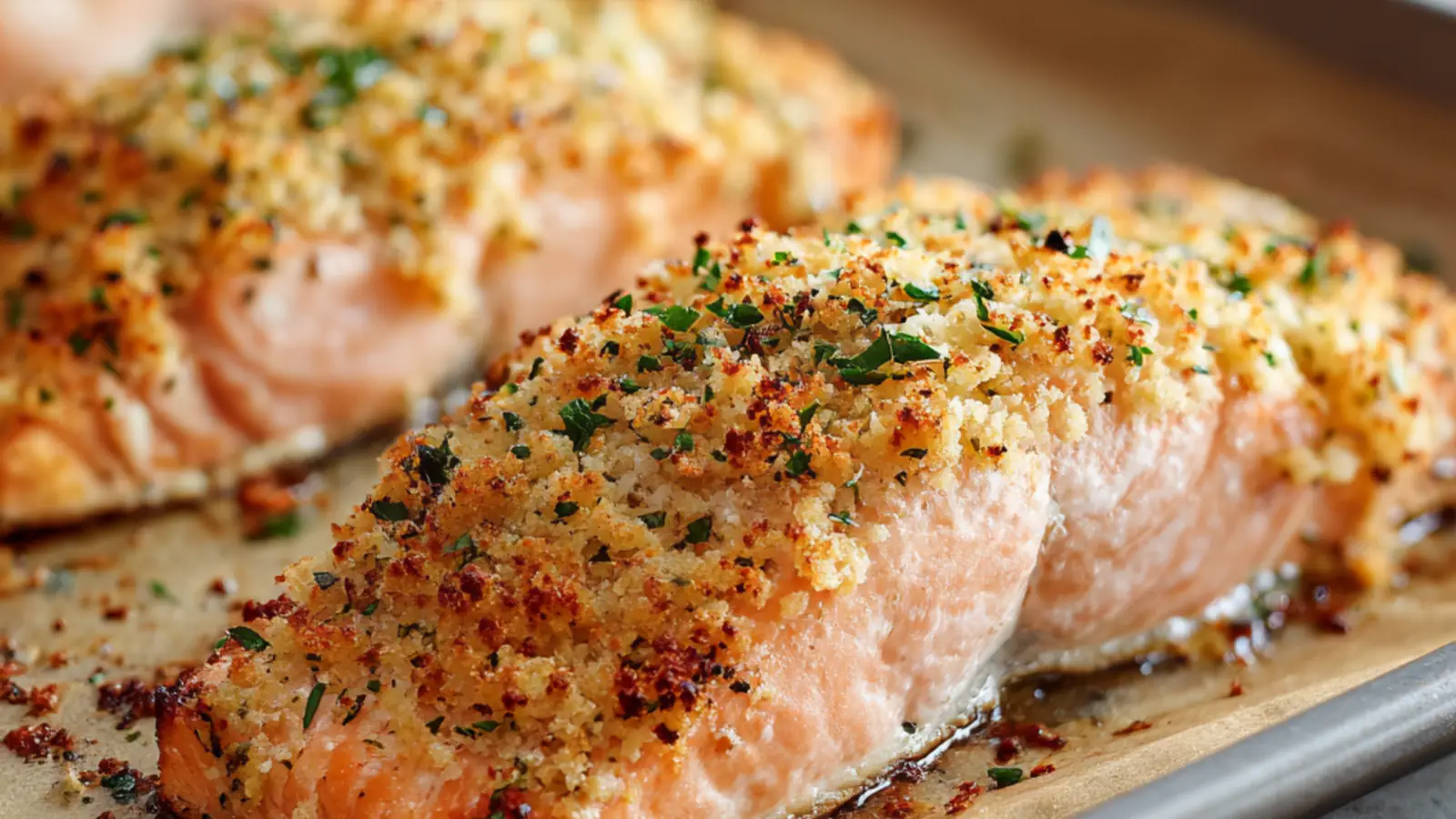
There’s something deeply comforting about a well-made baked salmon dish. This oven-baked salmon with parmesan crust is warm, gently crisp on top, and tender underneath, offering that perfect balance between simplicity and indulgence. It’s the kind of recipe that feels special enough for a relaxed dinner, yet easy enough to make on an ordinary weeknight without stress.
What makes this dish especially appealing is how dependable it is. The salmon bakes evenly, the parmesan topping turns golden and lightly crisp, and the flavors stay familiar and comforting. Nothing feels rushed or overworked. It’s a calm, steady recipe that delivers every time.
This is a meal that fits naturally into everyday life. It’s nourishing, satisfying, and quietly elegant, without requiring complicated steps or a long ingredient list.
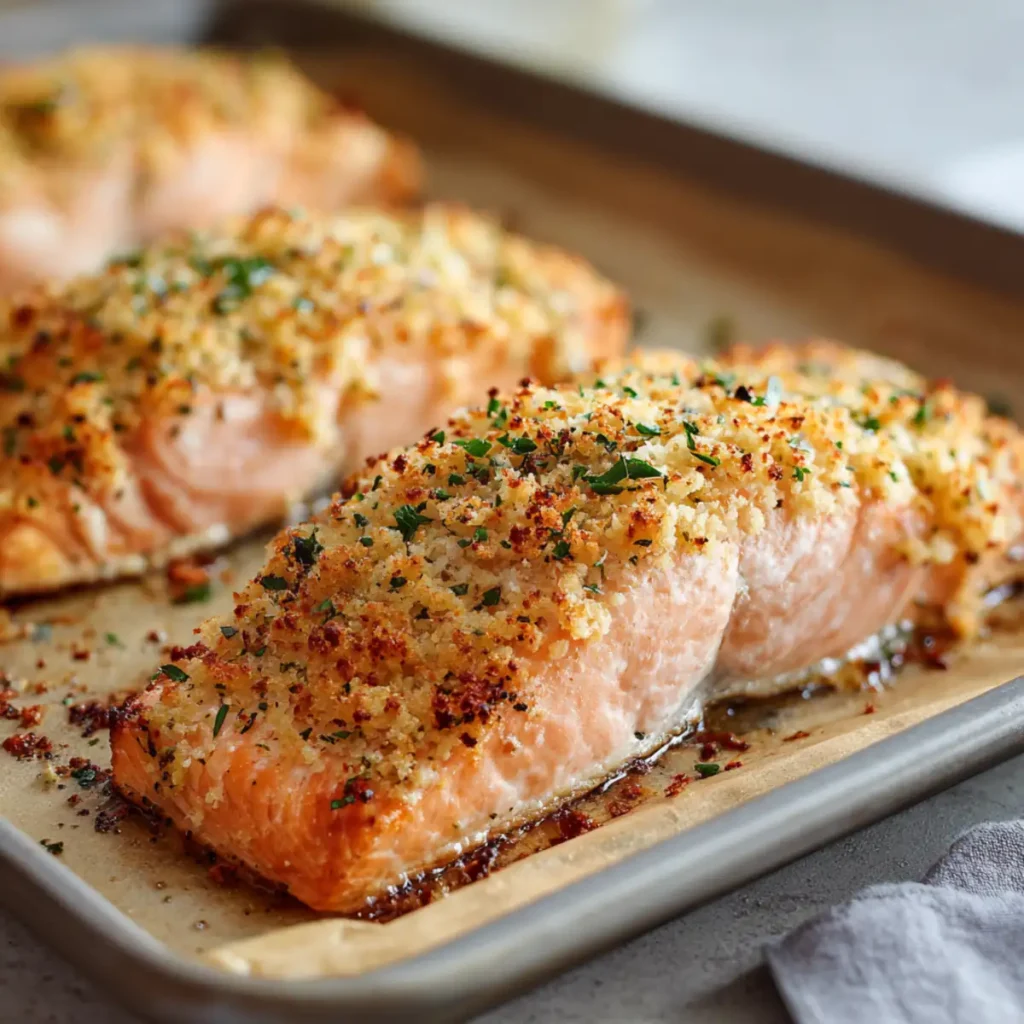
Table of Contents
Table of Contents
A Baked Salmon Recipe That Feels Reliable
Baked salmon works best when it’s treated simply. This recipe focuses on letting the fish shine while adding just enough texture and flavor through a parmesan crust. The topping adds a gentle crunch and savory depth without overpowering the natural richness of the salmon.
Everything cooks in the oven, making the process hands-off and easy to manage. While the salmon bakes, the parmesan melts and browns, creating a golden crust that contrasts beautifully with the tender fish beneath.
It’s the kind of recipe you can trust, whether you’re cooking for yourself or serving others.
Ingredients
These quantities make 4 servings.
For the salmon
- 4 salmon fillets (about 6 ounces each)
- 2 tablespoons olive oil
- 1/2 teaspoon salt
- 1/4 teaspoon black pepper
For the parmesan crust
- 3/4 cup grated parmesan cheese
- 1/2 cup breadcrumbs
- 2 tablespoons melted butter
- 1 teaspoon garlic powder
- 1/2 teaspoon dried parsley
Step-by-Step Instructions
Step 1: Preheat the oven
Preheat your oven to 400°F (200°C). Line a baking sheet with parchment paper or lightly grease it.
Step 2: Prepare the salmon
Place the salmon fillets on the prepared baking sheet. Drizzle with olive oil and season evenly with salt and black pepper.
Step 3: Make the parmesan topping
In a small bowl, combine the grated parmesan cheese, breadcrumbs, melted butter, garlic powder, and dried parsley. Mix until evenly combined.
Step 4: Top the salmon
Spoon the parmesan mixture evenly over each salmon fillet, gently pressing it down so it adheres to the surface.
Step 5: Bake the salmon
Transfer the baking sheet to the oven and bake for 12–15 minutes, until the salmon is cooked through and flakes easily with a fork.
Step 6: Brown the crust
If needed, switch the oven to broil for the last 1–2 minutes to lightly brown the parmesan crust. Watch closely to avoid burning.
Step 7: Rest briefly
Remove the salmon from the oven and let it rest for 2–3 minutes before serving. This helps the juices settle.
Step 8: Serve
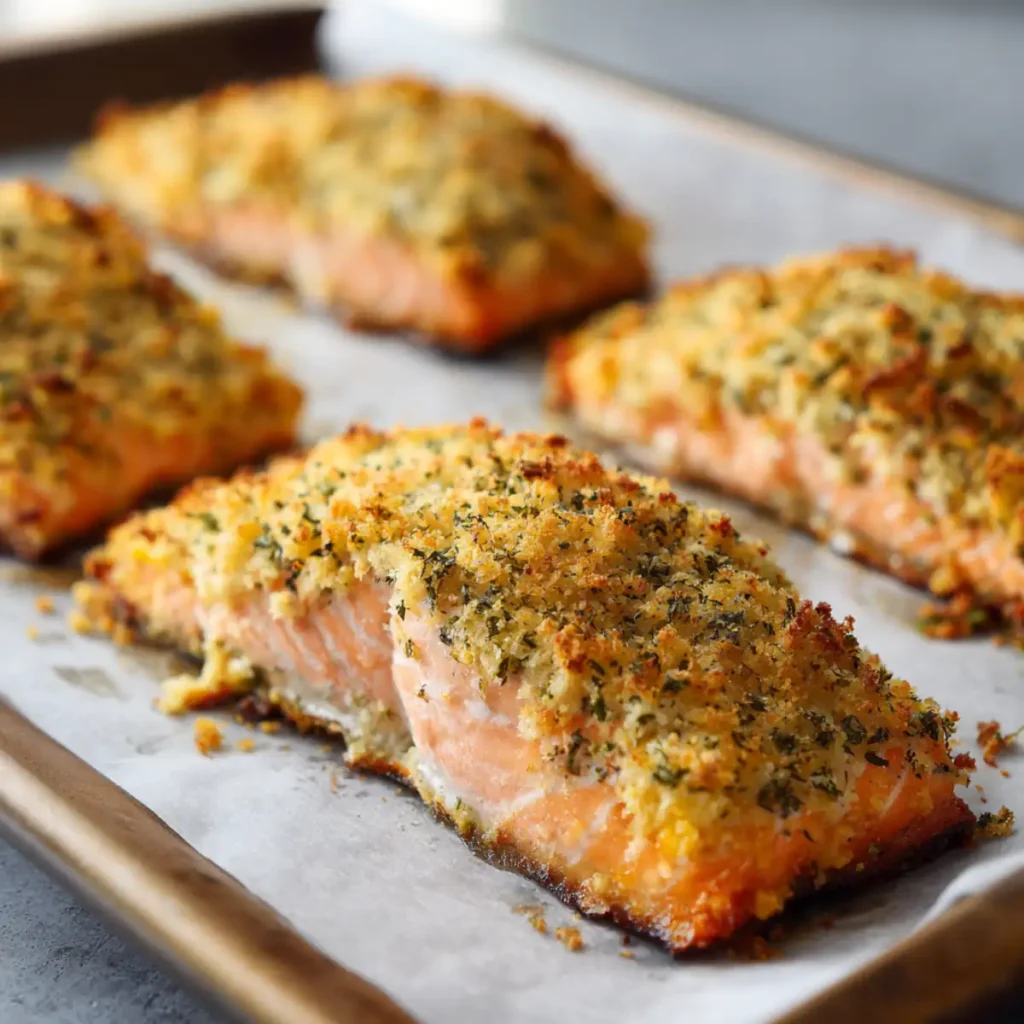
Serve warm while the crust is crisp and the salmon is tender.
What Makes This Parmesan Salmon So Satisfying
This dish works because it keeps everything balanced. The salmon stays moist and tender, while the parmesan crust adds texture and savory depth. Neither element overwhelms the other.
Baking at a consistent temperature allows the fish to cook gently, preventing dryness. The topping melts and sets naturally, forming a light crust rather than a heavy layer.
It’s a simple approach that results in a dish that feels comforting, familiar, and satisfying.
Easy Ways to Serve This Salmon
Serve it as the main focus
This salmon is filling enough to stand on its own as the centerpiece of a meal.
Pair it with something light
Serving it with simple sides keeps the meal balanced and lets the salmon remain the highlight.
Keep the presentation simple
The golden crust and tender fish don’t need extra decoration to look appealing.
Enjoy it fresh from the oven
The contrast between crisp topping and soft salmon is best right after baking.
Tips for the Best Parmesan-Crusted Salmon
Pat the salmon dry
Drying the salmon before seasoning helps the topping adhere better.
Use evenly sized fillets
Similar thickness ensures even cooking.
Press the topping gently
This helps the crust stay in place while baking.
Watch closely when broiling
The parmesan crust browns quickly, so keep an eye on it.
Make-Ahead and Storage
Make ahead
You can prepare the parmesan topping up to 24 hours in advance and store it covered in the refrigerator. Assemble just before baking for the best texture.
Storage
Store leftovers in an airtight container in the refrigerator for up to 2 days.
Reheating
Reheat gently in the oven at a low temperature until warmed through. Avoid microwaving, as it can soften the crust.
Texture note
The crust is crispiest when freshly baked, but leftovers still taste good when reheated gently.
Nutrition Facts (Per Serving)
Calories: 410 kcal
Protein: 34 g
Fat: 26 g
Carbohydrates: 12 g
Fiber: 1 g
Sodium: 520 mg
Values may vary depending on ingredients used.
FAQ
Does the parmesan crust stay crispy?
Yes, especially when served fresh. It softens slightly after storage but still adds good texture.
Can I use skin-on salmon?
Yes. Place the salmon skin-side down and proceed as written.
How do I know when the salmon is done?
It should flake easily with a fork and appear opaque throughout.
Can I prepare this recipe ahead of time?
You can prep the topping ahead, but bake the salmon just before serving.
Is this recipe suitable for weeknights?
Absolutely. It’s quick, simple, and mostly hands-off.
Can I double the recipe?
Yes. Use a larger baking sheet and avoid overcrowding.
Does this dish reheat well?
It reheats best in the oven to maintain texture.
Final Thoughts
Oven-baked salmon with parmesan crust is the kind of recipe that quietly earns a place in your regular rotation. It’s dependable, comforting, and simple in a way that makes cooking feel calm rather than demanding.
This dish proves that you don’t need complicated steps or bold tricks to make something satisfying. With a few well-chosen ingredients and gentle cooking, you end up with a meal that feels warm, familiar, and genuinely enjoyable. It’s a recipe you can return to whenever you want something reliable, nourishing, and comforting.