

There’s something unmistakably comforting about freshly made French beignets. Soft, airy, lightly crisp on the outside, and pillowy on the inside, they feel both indulgent and nostalgic at the same time. These soft vanilla French beignets bring that classic experience into your kitchen in a way that feels approachable, calm, and genuinely enjoyable.
This recipe focuses on simplicity and texture. The dough is gentle to work with, the vanilla adds warmth and softness to the flavor, and the frying process is straightforward without being intimidating. The result is a batch of beignets that feel light, tender, and just sweet enough, perfect for slow mornings or relaxed afternoons.
Beignets aren’t about rushing. They’re about taking a little time, enjoying the process, and ending up with something warm and comforting that’s meant to be shared. This version keeps everything simple while staying true to that spirit.
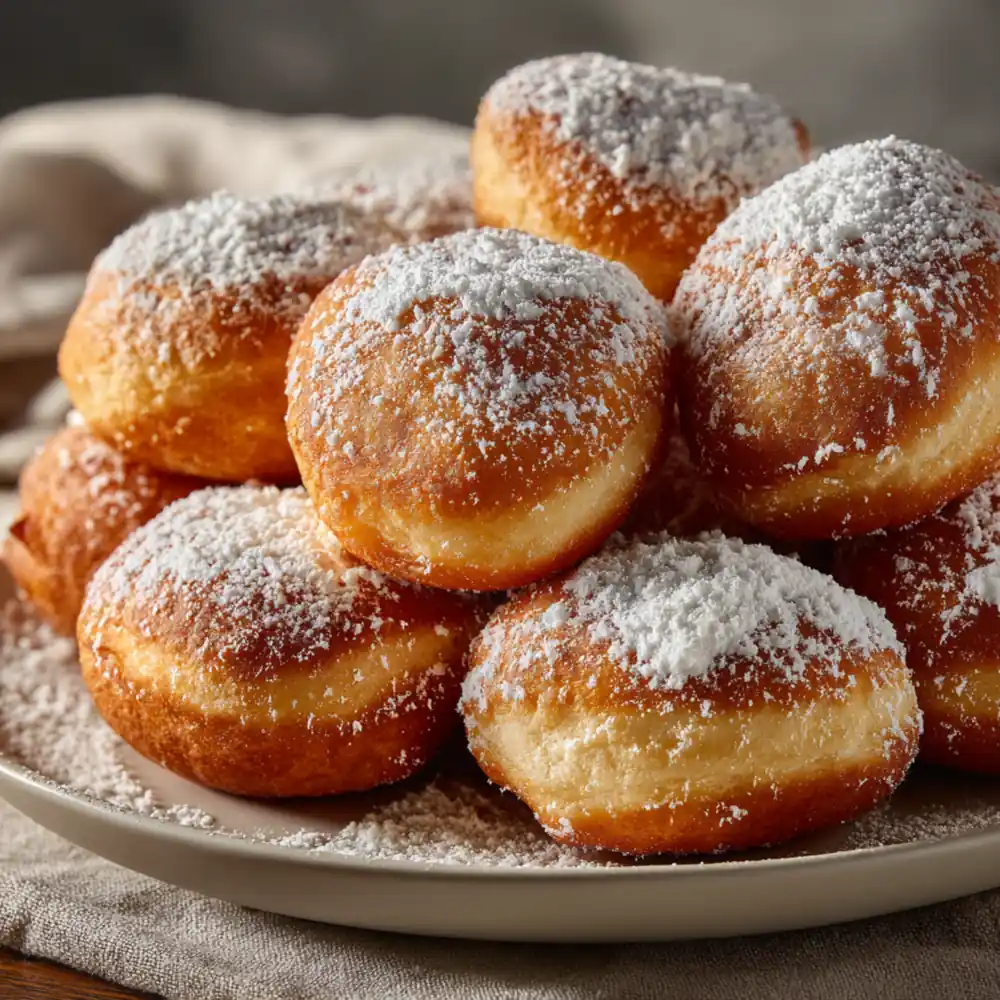
Table of Contents
Table of Contents
A Gentle Introduction to Homemade Beignets
Making beignets at home may sound ambitious, but it doesn’t have to be. This recipe breaks the process into easy, manageable steps that guide you calmly from dough to finished pastries. There’s no need for complicated techniques or special equipment, just a little patience and care.
The vanilla in the dough adds a soft, rounded sweetness that pairs beautifully with the light dusting of powdered sugar. Each bite feels airy and comforting, with a texture that’s delicate rather than heavy. These beignets are meant to be enjoyed warm, when they’re at their softest and most fragrant.
Ingredients
These quantities make about 20 beignets.
For the dough
- 3/4 cup warm milk
- 2 1/4 teaspoons active dry yeast
- 1/4 cup granulated sugar
- 1 large egg
- 2 tablespoons unsalted butter, melted
- 1 teaspoon vanilla extract
- 3 cups all-purpose flour
- 1/2 teaspoon salt
For frying
- Vegetable oil, for frying
For finishing
- Powdered sugar, for dusting
Step-by-Step Instructions
Step 1: Activate the yeast
Pour the warm milk into a large bowl. Sprinkle the yeast over the milk and add the granulated sugar. Stir gently and let it sit for about 5 minutes, until the mixture looks slightly foamy.
Step 2: Add wet ingredients
Whisk the egg, melted butter, and vanilla extract into the yeast mixture until well combined.
Step 3: Form the dough
Add the flour and salt to the bowl. Stir until a soft dough forms. The dough should be slightly sticky but manageable.
Step 4: Knead gently
Turn the dough out onto a lightly floured surface and knead for about 5 minutes, until smooth and elastic. Avoid adding too much flour, as a softer dough leads to lighter beignets.
Step 5: First rise
Place the dough in a lightly greased bowl, cover, and let it rise in a warm place for about 1 to 1½ hours, until doubled in size.
Step 6: Roll and cut
Punch down the dough gently. Roll it out on a floured surface to about 1/4-inch thickness. Cut into small squares or rectangles.
Step 7: Heat the oil
Heat vegetable oil in a deep pan to 350°F (175°C). Maintain a steady temperature for even frying.
Step 8: Fry the beignets
Carefully place a few pieces of dough into the hot oil. Fry for about 1–2 minutes per side, until puffed and lightly golden. Do not overcrowd the pan.
Step 9: Drain and dust
Remove the beignets with a slotted spoon and place them on paper towels. Dust generously with powdered sugar while still warm.
What Makes These Beignets So Soft
The softness of these beignets comes from a combination of gentle kneading, proper rising time, and careful frying. Keeping the dough slightly soft allows it to puff beautifully in the oil, creating that light, airy interior.
Vanilla plays a subtle but important role here. It doesn’t overpower the dough, but it adds warmth and roundness that makes each bite feel more comforting and complete.
Easy Ways to Enjoy Vanilla Beignets
Keep them classic
Enjoy them warm with a generous dusting of powdered sugar. Simple and timeless.
Serve them for sharing
Arrange them on a platter and let everyone help themselves. Beignets are naturally social pastries.
Enjoy them slowly
Pair them with a warm drink and take your time. They’re best enjoyed unrushed.

Tips for Light, Fluffy Beignets
Use warm, not hot milk
Milk that’s too hot can affect the yeast. Warm milk helps it activate gently.
Don’t over-knead
A soft dough leads to lighter beignets. Knead just until smooth.
Maintain oil temperature
Oil that’s too cool makes greasy beignets, while oil that’s too hot browns them too quickly.
Fry in small batches
This keeps the oil temperature steady and helps each beignet cook evenly.
Make-Ahead and Storage
Make ahead
The dough can be prepared and refrigerated overnight after the first rise. Bring it to room temperature before rolling and frying.
Storage
- Beignets are best enjoyed fresh, but leftovers can be stored at room temperature for up to 1 day.
Reheating
Warm gently to restore softness, though freshly fried is always best.
Nutrition Facts (Per Serving)
Calories: 210 kcal
Protein: 4 g
Fat: 8 g
Carbohydrates: 30 g
Fiber: 1 g
Sodium: 180 mg
Values may vary depending on frying oil and portion size.
FAQ
Are beignets supposed to be soft or crispy?
They should be lightly crisp on the outside and very soft and airy inside.
Can I prepare the dough ahead of time?
Yes. You can refrigerate the dough after the first rise and fry the next day.
Why didn’t my beignets puff up?
This usually happens if the oil isn’t hot enough or the dough didn’t rise fully.
Can I bake these instead of frying?
Traditional beignets are fried for their signature texture. Baking will give a different result.
How thick should the dough be rolled?
About 1/4-inch thick works best for even puffing.
Do beignets need to be eaten warm?
They’re best warm, when the texture is softest and most enjoyable.
Can I double the recipe?
Yes. This recipe doubles easily. Fry in batches to keep the oil temperature steady.
Final Thoughts
Soft vanilla French beignets are one of those recipes that turn an ordinary moment into something special. They’re gentle, comforting, and deeply satisfying without being complicated or fussy. From the first rise of the dough to the final dusting of powdered sugar, the process feels calm and rewarding.
These beignets invite you to slow down, enjoy the kitchen, and share something warm with the people around you. Whether you make them for a quiet morning or a relaxed gathering, they bring a sense of warmth and ease that’s hard to resist.