
A Fresh and Comforting Dinner You’ll Actually Look Forward To
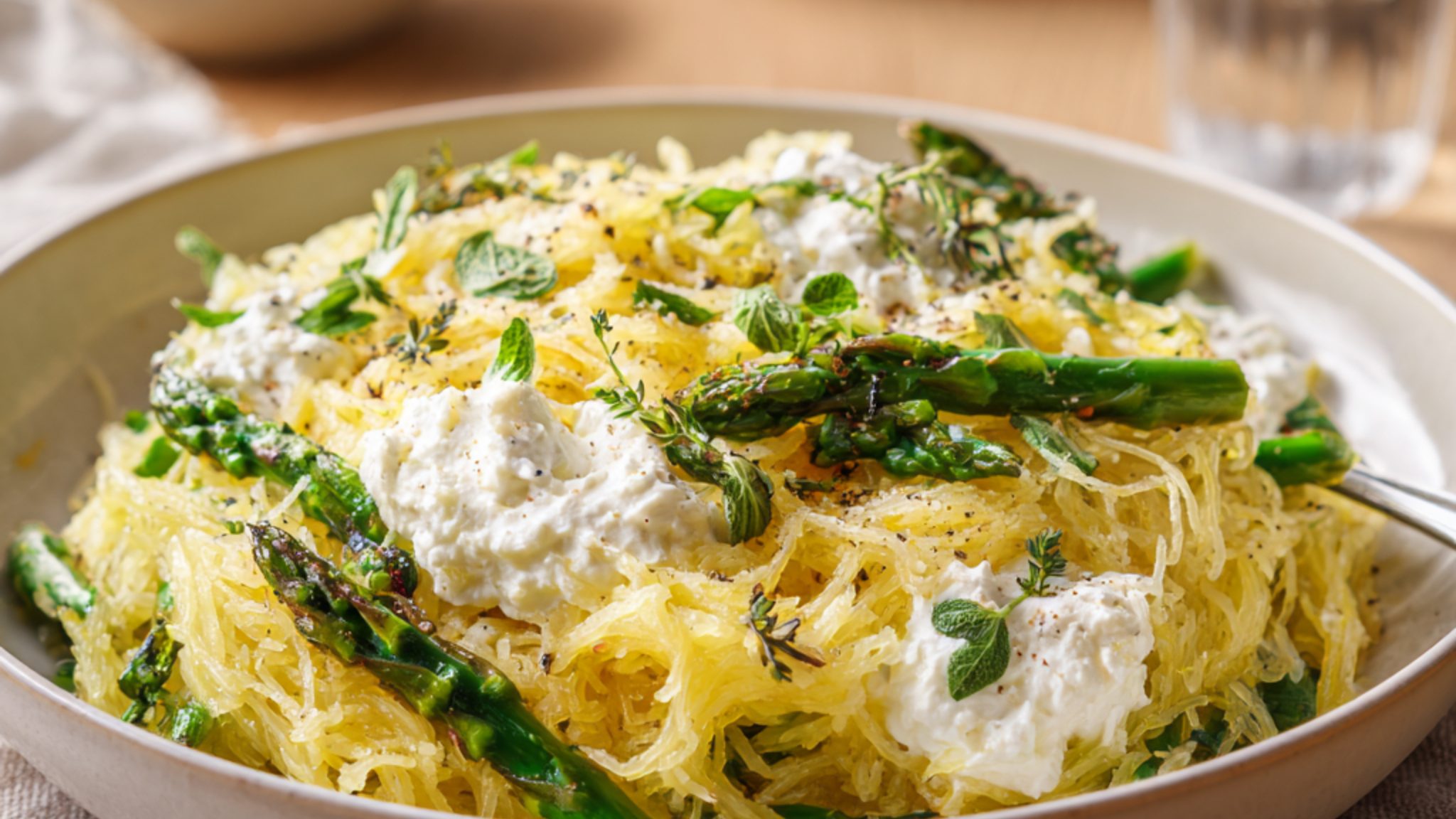
Some nights, you want something light but still satisfying. Something that feels fresh, comforting, and a little bit special, without turning your kitchen into chaos. That’s exactly where this spaghetti squash with asparagus, ricotta, lemon, and thyme comes in.
It’s one of those meals that quietly surprises you. The kind where simple ingredients come together in a way that feels elevated, yet completely doable on a busy evening. The roasted squash turns into tender, noodle-like strands, while the creamy ricotta melts into every bite. Add bright lemon and fragrant thyme, and suddenly dinner feels a lot more exciting.
If you’ve ever struggled to find a healthy dinner that doesn’t feel boring or repetitive, this recipe is going to be a game-changer.
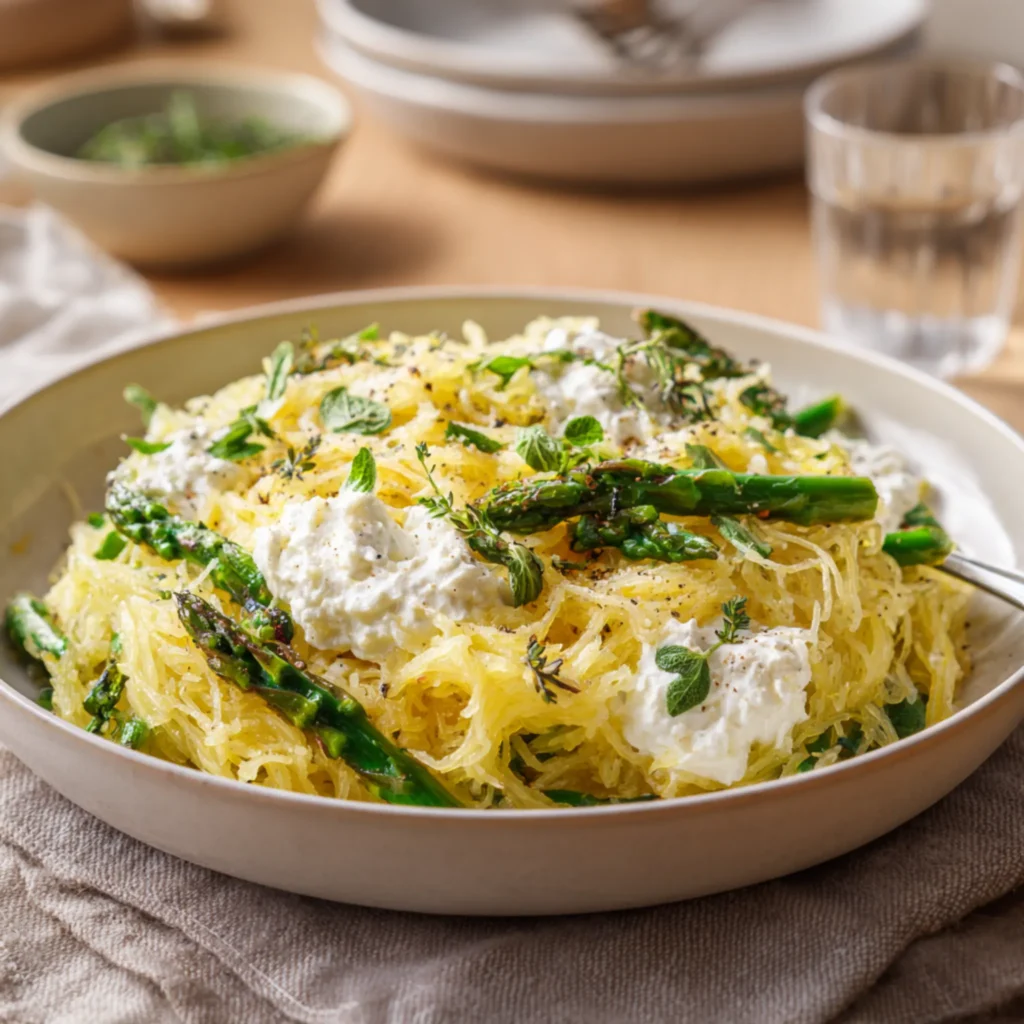
Table of Contents
Ingredients You’ll Need
Main Ingredients
- 1 medium spaghetti squash (about 2.5 to 3 pounds)
- 1 bunch asparagus (about 1 pound), trimmed and cut into 2-inch pieces
- 1 cup whole milk ricotta cheese
- 2 tablespoons olive oil
- 2 cloves garlic, minced
- Zest of 1 lemon
- 2 tablespoons fresh lemon juice
- 1 teaspoon fresh thyme leaves (or ½ teaspoon dried thyme)
- ½ teaspoon salt
- ¼ teaspoon black pepper
Optional Add-Ons
- ¼ cup grated Parmesan cheese
- 1 tablespoon chopped fresh parsley
- Red pepper flakes for a little heat
Step-by-Step Cooking Instructions
Step 1: Prepare the Spaghetti Squash
Preheat your oven to 400°F (200°C).
Carefully slice the spaghetti squash in half lengthwise. Scoop out the seeds using a spoon, just like you would with a pumpkin. Drizzle the inside with 1 tablespoon olive oil and sprinkle lightly with salt and pepper.
Place the halves cut-side down on a baking sheet lined with parchment paper. Roast for 25 to 30 minutes, until the flesh is tender and easily shredded with a fork.
Step 2: Roast the Asparagus
While the squash is roasting, spread the asparagus pieces on another baking sheet.
Drizzle with the remaining 1 tablespoon olive oil, add a pinch of salt and pepper, and toss to coat evenly. Roast in the oven for 10 to 12 minutes, until slightly tender but still bright and crisp.
Step 3: Create the Squash “Noodles”
Once the squash is done, let it cool for a few minutes. Then use a fork to gently scrape the flesh into spaghetti-like strands.
Transfer the strands to a large mixing bowl. Try not to overmix so the texture stays light and fluffy.
Step 4: Build the Flavor Base
Add the minced garlic, lemon zest, lemon juice, thyme, salt, and pepper to the squash.
Toss gently to combine. The warmth of the squash will soften the garlic slightly and release all those fresh aromas.
Step 5: Add Ricotta and Asparagus
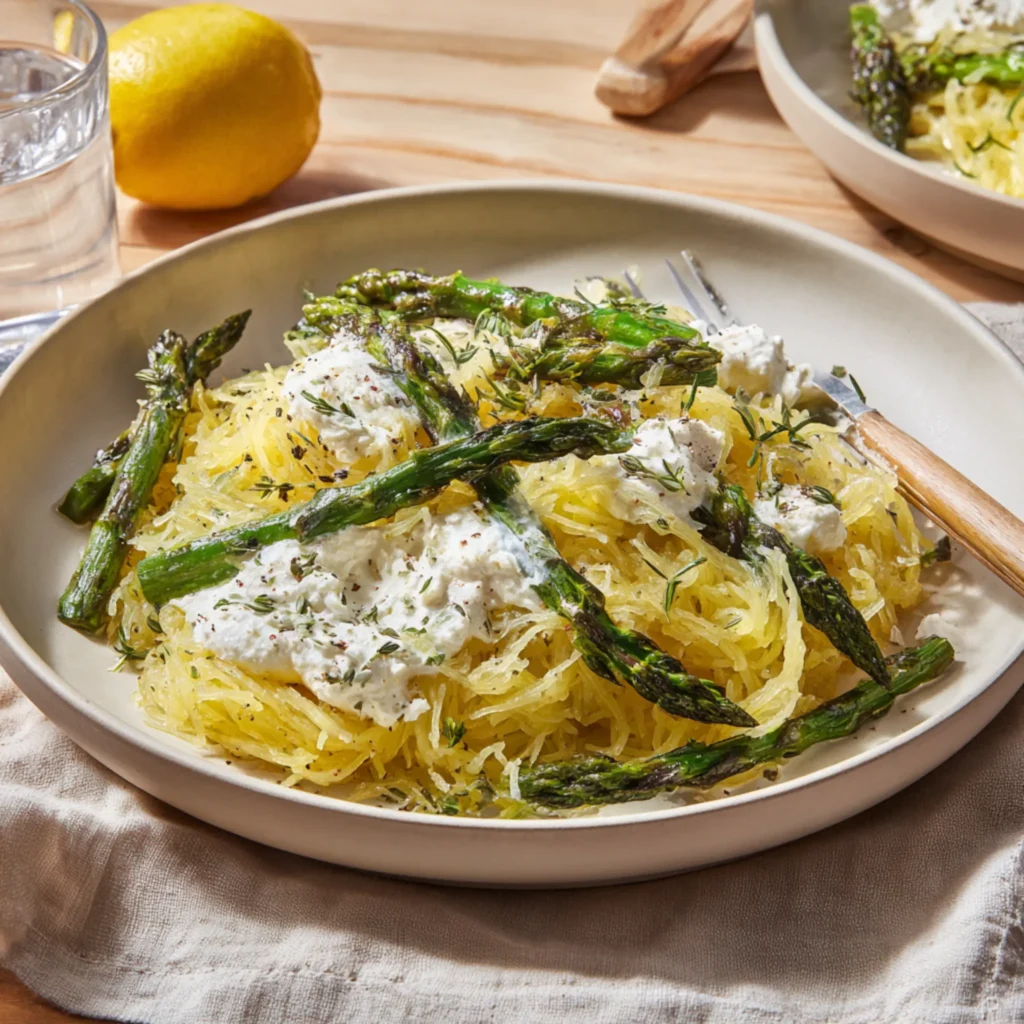
Spoon in the ricotta cheese and gently fold it into the squash. You don’t want it fully blended, small creamy pockets are what make this dish so satisfying.
Add the roasted asparagus and toss again lightly.
Step 6: Finish and Serve
Taste and adjust seasoning if needed. Sprinkle Parmesan cheese and parsley on top if using.
Serve immediately while warm, letting the ricotta melt slightly into the strands.
A Different Take on a Light Dinner Favorite
What makes this dish stand out is the balance. You get creamy, bright, herby, and slightly roasted flavors all in one bite.
Unlike heavier pasta dishes, this one leaves you feeling satisfied without being weighed down. It’s perfect when you want something nourishing that still feels indulgent.
It’s also incredibly flexible. You can easily adjust the flavors based on what you have on hand, making it a reliable go-to recipe.
Tips for the Best Texture and Flavor
Getting the texture right is what takes this dish from good to unforgettable.
First, don’t overcook the spaghetti squash. If it becomes too soft, it can turn watery and lose that signature noodle-like texture. Aim for tender but still slightly firm strands.
Second, salt in layers. Light seasoning on the squash, asparagus, and final dish ensures balanced flavor throughout.
Fresh lemon zest is key here. It adds brightness that bottled juice alone just can’t replicate. Always zest before juicing your lemon for the best result.
When mixing in ricotta, go gently. You want creamy pockets rather than a fully blended sauce. This creates a more interesting texture and richer experience with every bite.
Finally, don’t skip the herbs. Thyme adds a subtle depth that ties everything together beautifully.
Easy Variations to Try
One of the best things about this recipe is how adaptable it is.
For a protein boost, add grilled chicken or sautéed shrimp. They pair beautifully with the lemon and ricotta flavors.
If you want a slightly richer version, stir in a tablespoon of butter or a splash of cream before serving.
For extra crunch, sprinkle toasted pine nuts or almonds on top. This adds contrast to the creamy texture.
You can also swap asparagus for other vegetables like zucchini, broccoli, or spinach depending on the season.
Serving Ideas That Elevate the Meal
This dish works well on its own, but pairing it with a few simple sides can turn it into a complete, memorable meal.
A crisp green salad with a light vinaigrette complements the creamy ricotta perfectly. The freshness balances the richness without overpowering the dish.
You can also serve it alongside roasted vegetables like carrots or bell peppers to add more color and variety to your plate.
For a slightly more filling dinner, pair it with a warm soup like tomato or vegetable broth-based soups.
Even a simple slice of crusty bread on the side can make the meal feel more comforting and complete.
Storage and Reheating Tips
If you have leftovers, this dish stores surprisingly well.
Place it in an airtight container and refrigerate for up to 3 days. The flavors actually deepen over time, making it just as delicious the next day.
To reheat, warm it gently in a pan over low heat. Add a small splash of water or broth to prevent it from drying out.
Avoid microwaving on high heat, as it can make the squash watery and unevenly heated.
Common Mistakes to Avoid
One of the most common mistakes is overcooking the squash. This leads to mushy strands that don’t hold up well.
Another issue is under-seasoning. Because the ingredients are simple, proper seasoning is essential to bring everything to life.
Adding too much ricotta can also overpower the dish. Stick to the recommended amount for the best balance.
Lastly, skipping the lemon zest reduces the brightness of the dish significantly. It’s a small step that makes a big difference.
Frequently Asked Questions
Can I make this recipe ahead of time?
Yes, you can prepare all the components ahead and combine them just before serving. Keep the squash and asparagus separate for the best texture.
Can I use frozen asparagus?
Fresh is recommended for the best texture, but frozen asparagus can work if thawed and drained well.
What can I use instead of ricotta?
Cottage cheese or mascarpone can be used as substitutes, though the flavor and texture will vary slightly.
How do I know when spaghetti squash is done?
It should be easily pierced with a fork, and the flesh should separate into strands without resistance.
Can I make this dairy-free?
Yes, you can use a plant-based ricotta alternative and still get a creamy result.
Is this good for meal prep?
Absolutely. It reheats well and holds its flavor, making it ideal for lunches or quick dinners.
Nutritional Facts (Per Serving Approximate)
- Calories: 240
- Protein: 10g
- Carbohydrates: 18g
- Fiber: 4g
- Fat: 14g
- Sugar: 6g
Final Thoughts
This spaghetti squash with asparagus, ricotta, lemon, and thyme is one of those recipes that quietly earns a permanent spot in your rotation.
It’s simple without being boring, light without feeling incomplete, and comforting without being heavy. Whether you’re cooking for yourself, your family, or even guests, it delivers every time.
Once you try it, you’ll start to see just how versatile and satisfying a dish like this can be.