
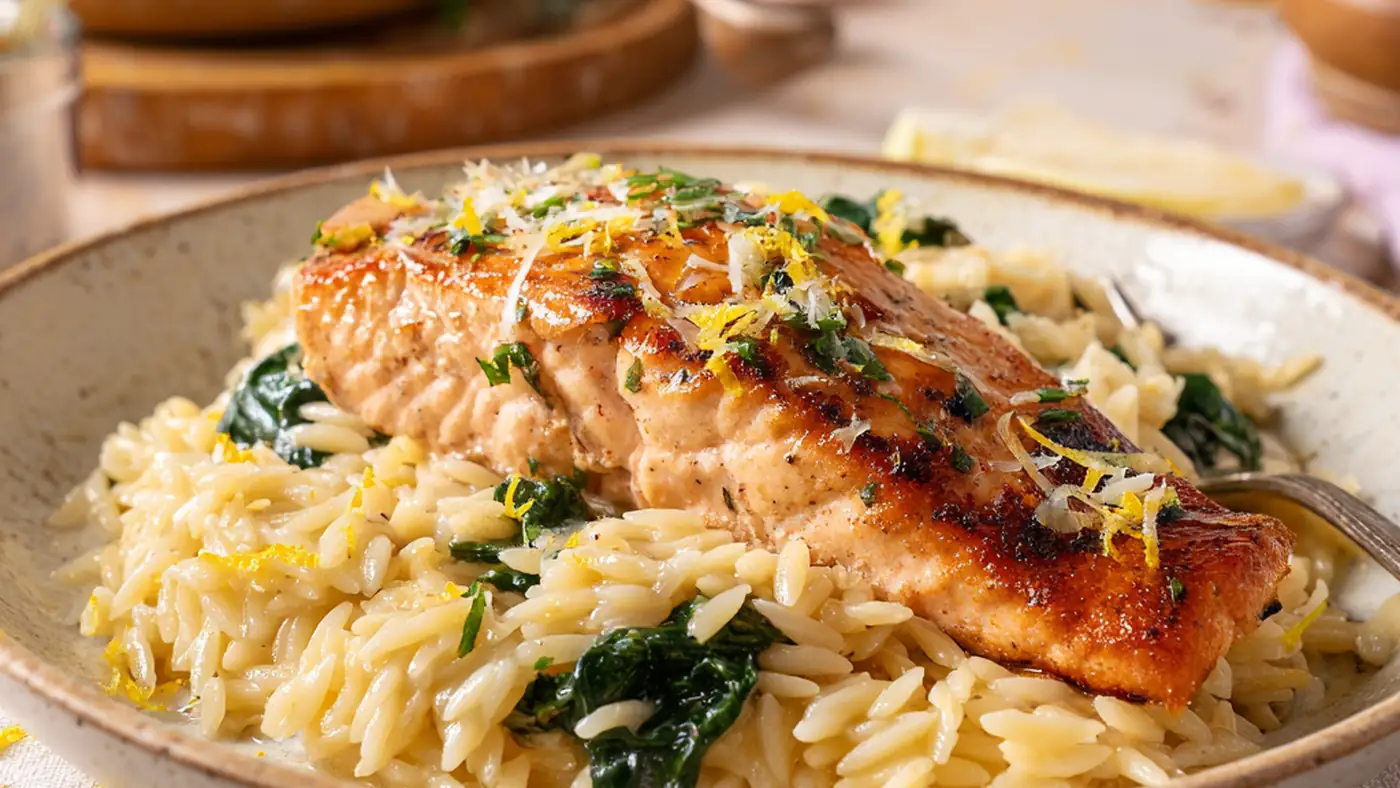
There are nights when I don’t want to think too much, I just want something warm, fresh, and satisfying on the table without turning the kitchen upside down. This is exactly the kind of recipe I lean on when I need that balance. It feels a little elevated, but it’s honestly very simple once you start.
What makes this one special for me is the way the orzo soaks up all that lemony, garlicky flavor while the salmon stays tender and slightly crisp on the outside. It’s comforting, but still bright and fresh, which is not always easy to achieve in a quick dinner.
I’ve made this more times than I can count, sometimes for a quiet dinner, sometimes when I want something reliable that still feels like I put in effort. Every time, it delivers.
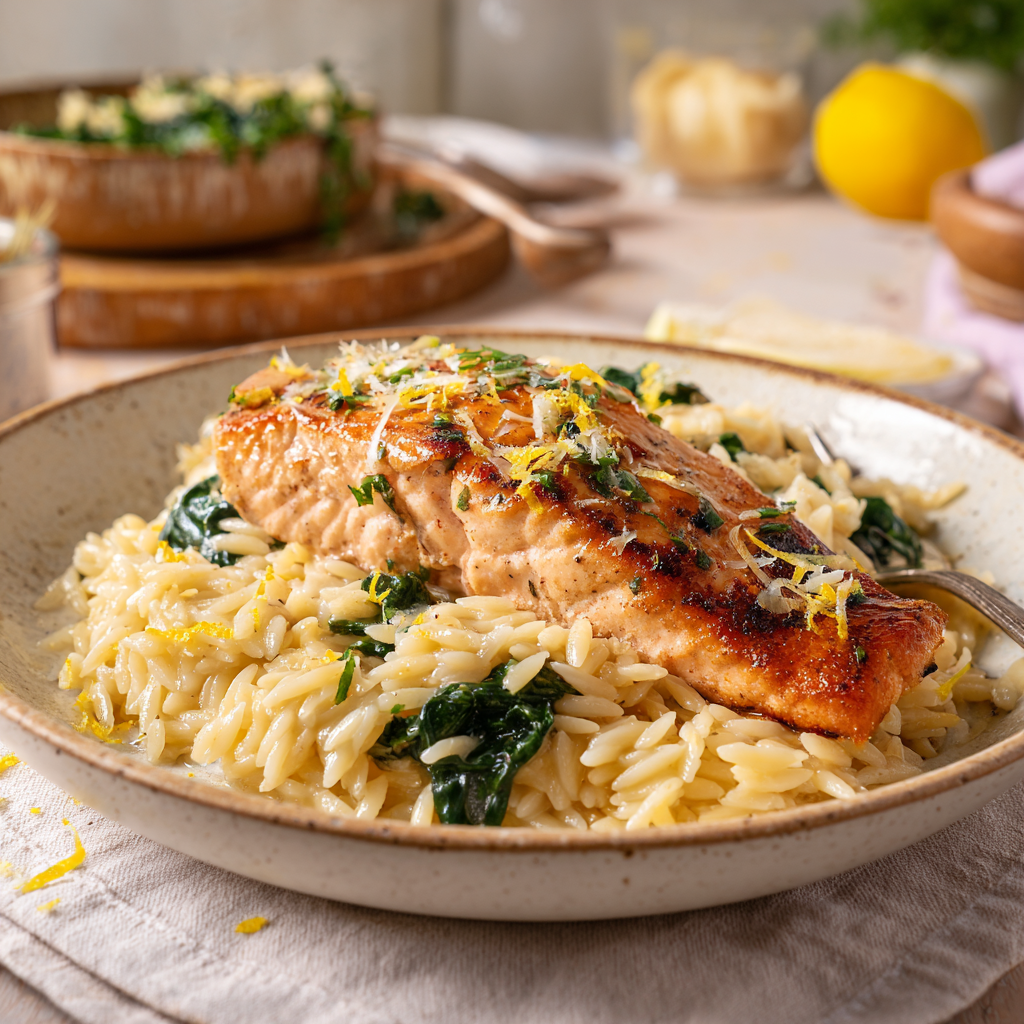
Table of Contents
A Fresh Take on a One-Pan Favorite
This isn’t your typical heavy skillet meal. The lemon keeps everything light, the garlic adds depth, and the orzo turns silky without feeling too rich.
What I really love is how everything cooks together, so the flavors actually blend instead of sitting separately on the plate. The salmon juices melt into the orzo, the broth carries the citrus, and the Parmesan ties it all together in a subtle, creamy way.
It’s the kind of meal that tastes like it took much longer than 30 minutes.
Ingredients You’ll Need
For the Salmon
- 4 salmon fillets, about 150–180 g each
- 1 teaspoon salt, divided
- ½ teaspoon black pepper
- 1 teaspoon paprika
- 2 tablespoons olive oil
For the Lemon Orzo
- 1 cup (180 g) dry orzo pasta
- 3 cloves garlic, finely minced
- 2 cups (480 ml) chicken or vegetable broth
- ½ cup (120 ml) heavy cream
- ½ cup (50 g) grated Parmesan cheese
- Zest of 1 lemon
- Juice of 1 lemon (about 2–3 tablespoons)
- 1 teaspoon dried oregano
- 1 cup (30 g) fresh spinach
- 1 tablespoon butter
Optional Garnish
- Fresh parsley, chopped
- Extra Parmesan
- Lemon wedges
Step-by-Step Instructions
Step 1, Season the Salmon
Pat the salmon fillets dry with paper towels. This helps you get that beautiful golden crust.
Season both sides with salt, pepper, and paprika. Don’t rush this part, make sure everything is evenly coated.
Step 2, Sear Until Golden
Heat olive oil in a large skillet over medium-high heat. Once the oil is hot, place the salmon fillets skin-side down if they have skin.
Let them cook undisturbed for about 4–5 minutes. This is where the magic happens, resist the urge to move them.
Flip carefully and cook another 2–3 minutes until just cooked through. Remove from the skillet and set aside.
Step 3, Build the Flavor Base
In the same skillet, lower the heat slightly and add the minced garlic. Stir for about 30 seconds until fragrant.
You’ll notice all those browned bits from the salmon, that’s pure flavor. Keep them in the pan.
Step 4, Toast the Orzo
Add the dry orzo directly into the skillet. Stir for 1–2 minutes so it lightly toasts and absorbs the garlic flavor.
This step gives the orzo a slightly nutty taste and prevents it from turning mushy later.
Step 5, Simmer Until Tender
Pour in the broth and stir well, scraping up everything from the bottom.
Let it simmer gently for about 8–10 minutes, stirring occasionally so it doesn’t stick. The orzo should absorb most of the liquid and become tender but still slightly firm.
Step 6, Make It Creamy
Lower the heat and stir in the cream, Parmesan, lemon zest, and lemon juice.
The texture should turn silky and slightly thick, not overly heavy. If it feels too thick, add a splash of broth.
Step 7, Add Greens and Butter
Stir in the spinach and butter. The spinach will wilt quickly, and the butter will add a smooth finish.
Taste and adjust salt if needed.
Step 8, Bring It All Together
Place the salmon back on top of the orzo. Let everything sit together for 2–3 minutes so the flavors blend.
Spoon a bit of the creamy orzo over the salmon before serving.
The Texture and Flavor You Can Expect
The salmon is tender inside with a lightly crisp exterior, almost buttery but still clean in flavor.
The orzo is where everything comes together. It’s creamy without being too rich, with a gentle tang from the lemon and a savory depth from the Parmesan and broth.
The spinach adds a soft contrast, and the garlic ties everything together in a way that feels warm and familiar.
Every bite feels balanced, nothing overpowering, just layers of flavor working quietly together.
Small Kitchen Habits That Changed This Recipe for Me
Over time, I’ve noticed that a few small habits completely changed how this dish turns out.
First, I always let the salmon sit at room temperature for about 10 minutes before cooking. It cooks more evenly and stays juicier inside.
Second, I don’t rush the simmering stage of the orzo. Keeping the heat gentle instead of aggressive helps the pasta absorb the liquid gradually, which gives it that creamy, almost risotto-like texture without needing extra cream.
Another thing I’ve learned is to taste as I go. Sometimes lemons are sharper, sometimes milder, so adjusting the juice at the end makes a real difference.
These little details aren’t complicated, but they quietly take the dish from good to something you actually look forward to eating again.
How I Plate This When I Want It to Feel Special
Even though this is a quick dinner, I still like to plate it in a way that feels a bit more intentional.
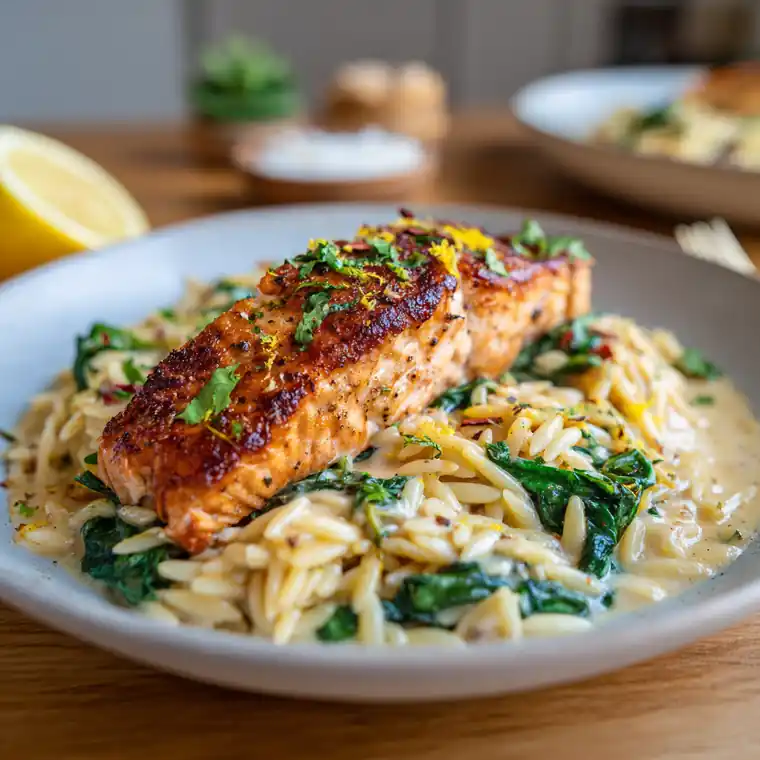
I usually start by spooning the orzo into the center of a shallow bowl or plate, letting it spread naturally instead of flattening it too much. Then I place the salmon right on top so it sits slightly elevated.
A small sprinkle of fresh parsley and a light dusting of Parmesan makes it look finished without trying too hard. Sometimes I add a small wedge of lemon on the side, not just for looks but because that extra squeeze right before eating really wakes everything up.
What I’ve noticed is that even small plating touches can make a simple meal feel more satisfying. It slows things down just enough to enjoy it properly.
Flavor Pairings That Work Really Well
This dish is already balanced, but if you’re building a full meal around it, a few simple sides can complement it beautifully.
A crisp green salad with a light vinaigrette works really well because it contrasts the creamy orzo. Something like arugula or mixed greens adds a peppery freshness that keeps the meal from feeling too heavy.
Roasted vegetables are another great option. I like pairing it with roasted asparagus, zucchini, or even carrots. The slight caramelization from roasting adds depth without competing with the main dish.
If you want something extra simple, even a few slices of fresh cucumber with a pinch of salt and lemon can refresh the palate between bites.
Common Mistakes to Avoid
One mistake I made early on was overcooking the salmon. It happens quickly, especially if the fillets are thin. Keeping an eye on it and removing it just before it’s fully done makes a big difference because it finishes cooking when you return it to the pan.
Another common issue is adding too much liquid at once to the orzo. It’s better to let it absorb gradually. This helps control the texture and prevents it from becoming too soft.
Skipping the seasoning layers is another thing to watch. Seasoning only at the end won’t give you the same depth. A little salt at each stage builds flavor in a much more natural way.
And finally, adding lemon too early can dull its brightness. Always finish with it for that fresh, vibrant taste.
Easy Variations I’ve Tried
Sometimes I add cherry tomatoes during the simmer stage for a slightly sweet contrast.
If I want more greens, I mix in zucchini or kale instead of spinach.
For a stronger lemon flavor, I add extra zest right before serving.
And when I want something lighter, I reduce the cream slightly and add more broth.
On days when I want a deeper flavor, I’ll sprinkle a pinch of chili flakes or add a touch more garlic. It changes the personality of the dish without changing the effort.
Make It Work for Busy Days
This dish reheats surprisingly well. Just add a splash of broth or water before warming it up so the orzo loosens again.
You can also prep everything in advance, season the salmon, chop the garlic, measure the ingredients, and dinner comes together in minutes.
If you’re planning ahead, you can even cook the orzo base first and sear the salmon fresh right before serving. That way, you still get that crispy texture on top without rushing the rest of the meal.
It’s one of those meals that fits into real life without feeling rushed.
Frequently Asked Questions
Can I use frozen salmon?
Yes, just make sure it’s fully thawed and patted dry before cooking. Excess moisture will prevent proper searing.
What can I use instead of heavy cream?
You can substitute with half-and-half or even a mix of milk and a little butter. The texture will be lighter but still creamy.
How do I know when salmon is done?
It should flake easily with a fork and be opaque in the center. Slightly undercooking is better than overcooking.
Can I make this dairy-free?
Yes, skip the cream and Parmesan, and add a bit more broth plus a drizzle of olive oil for richness.
What if my orzo gets too thick?
Just add a splash of warm broth or water and stir. It loosens quickly.
Can I use another pasta?
Small pasta shapes like ditalini or small shells work best, but cooking time may vary slightly.
Can I make this ahead for meal prep?
Yes, but for best texture, store the salmon and orzo separately if possible. Reheat gently and combine right before eating.
How can I make it more protein-packed?
You can add extra salmon or even stir in cooked shrimp during the final minutes for a richer, more filling version.
Nutritional Information (Per Serving Approximate)
Calories 520 kcal
Protein 35 g
Carbohydrates 38 g
Fat 26 g
Fiber 2 g
Sugar 2 g
Sodium 620 mg
Final Thoughts
This is one of those meals that quietly becomes part of your routine. It’s not complicated, it doesn’t demand much, but it always feels satisfying.
I like how it brings together comfort and freshness without leaning too much in either direction. It’s simple enough for a regular evening, but still good enough to share when you want something that feels a bit special.
Over time, I’ve realized that recipes like this are the ones that stick. Not because they’re flashy, but because they work every single time. They fit into your day, your mood, and whatever you have going on.
And honestly, having a recipe like this in your rotation just makes cooking feel easier. You don’t have to overthink dinner, you already know it’s going to work.